Posts tonen met het label in Flanders Fields. Alle posts tonen

zaterdag 25 juli 2015

In Flanders fields where poppies grow


Waar je gaat langs Vlaamse wegen... 


You normally just find them along the road as wildflowers around here but this year
a lot of poppies were especially sowed and a while ago I noticed this border of poppies
along a little forest and near a small war cemetery.
I had to pull over and take some pictures.

Onlangs merkte ik een speciaal ingezaaide klaprozenstrook op langs een klein bosje
vlakbij een klein 'Engels kerkhof'. Zo heetten we toen we kind waren de typische, 
overal verspreide, Britse militaire begraafplaatsen. 
Even de auto aan de kant en wat foto's nemen was een must.


Everybody knows this red poppy as a symbol of remembrance of all warvictims.
You can read the whole story of how it became that symbol after the first world war here.
Did you know originally after WWI in France the cornflower and in Belgium the daisy
were symbols of remembrance, both also wildflowers that thrive after destruction. 

Iedereen kent deze rode poppies als de symbool voor herdenking van oorlogsslachtoffers.
Hoe deze poppy dit symbool werd kan je hier lezen 
en welke andere veldbloemen ook symbolen voor herdenking waren 
maar nooit uitgroeiden tot het symbool dat de rode poppy vandaag is.

All over Flanders this year fields of poppies were sowed to remember WWI and especially 
the connection of it to nature which still very much bares the traces of WWI,
especially here in de Westhoek.

Dit jaar werden overal in Vlaanderen klaproosvelden ingezaaid ter herdenking van WOI 
en vooral om het verband oorlog-natuur, dat misschien niet zo vanzelfsprekend lijkt,
te beklemtonen. Overal zijn nog de sporen van die oorlog in de natuur zichtbaar, 
zeker hier in de Westhoek. 


Due to the war a lot of forest was destroyed and lost forever. There's not much forest left here.
But looking at things from a positive point of view, a lot of the leftover bunkers are now
shelters for bats and a lot of bomb craters are now pools where rare amfibians thrive.
You may remember this post I wrote last year in which I told you about
the 'Pool of peace' to name just one.. 

Door de oorlog was veel bos voor altijd verloren. Grote stukken bos vind je hier niet meer.
Maar van de positieve kant bekeken zijn de vele overgebleven bunkers nu 
ideale overnachtingsplaatsen voor vleermuizen en bomkraters zijn nu poelen geworden 
waar zeldzame amfibieën zich thuis voelen. Je herinnert je misschien deze post van vorig jaar nog 
waar ik het over onder andere de 'Pool of peace' had. 


I've always loved poppies, so delicate and strong.
A beautiful symbol.

Ik hou van klaprozen, zo fragiel en toch sterk.
Een prachtig symbool.


Marian


dinsdag 30 september 2014

Harvest time

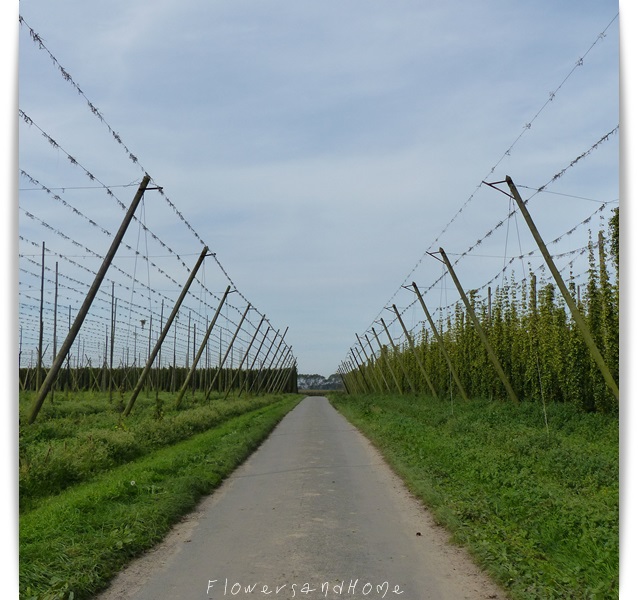
It's hop harvest time again and this is what the hop field looks like
after the hop bines have been harvested.


Not all of the hop fields have been harvested yet.


Wish I could add the smell of hops being harvested to these pictures.


Last day of September,
I wish you all a beautiful month of Oktober,
Autumn or Spring.
 
Marian


zondag 10 augustus 2014

Tyne Cot

Over the last two weeks I have been driving past this war cemetery twice a day almost every day, so last week I decided I had to stop and take the time to visit it. It's amazing how many people visit the cemetery, especially now with all the commemorations for the start of the first world war a century ago. Even the smaller cemeteries, like the two on either end of the street where we live, have much more visitors now. I think this will be something that will continue for the next four years and then calm down again and the deafening peace and quiet and the overwhelming feeling when entering one of the cemeteries will then return, not that that feeling isn't there now but it's different, not as touching as when you enter it alone without anyone else there. It is a good thing this Great War is remembered, especially with all the war that's going on in the world again now. That saddens me so much, maybe even more because I've been living in the middle of what was once a battlefield and now has so many cemeteries with soldiers from all over the world that came here to fight for freedom. Tyne Cot cemetery is the largest Commonwealth war cemetery on the continent and is therefore one of the most visited ones. So many young people lost their lives here, so so sad.
 
Dome with angel on one of the chapels that are on either end of the Tyne Cot
Memorial of the Missing wall in the cemetery.
 
This is the back entrance to the cemetery.
 
The cross of sacrifice with the stone of remembrance in front of it,
better visible in the picture below.
 
  
On the left, one of the chapels and the Tyne cot Memorial of the Missing wall
that goes on all the way to the right where there is a similar chapel but not in the picture.
On the wall are over 34000 names of soldiers that were never found but
lost their lives here during the first world war after the 16th of August 1917.
All the soldiers without a known grave that lost their lives before that time are
on the walls of the Menin gate as you might know.
This Tyne Cot memorial wall is therefore the sequel to the Menin gate. 
 
Graves, grass and flowers are constantly very well taken care of.


In this picture you see the front entrance to the cemetery.
From the cemetery you have a magnificent view on the surrounding fields
and you can see Ieper lying in the distance.
  
Tyne cot Memorial of the Missing and the Stone of Remembrance in front of it;
in between more graves of soldiers. There are 11954 soldiers buried here,
but as many graves as there are, this is an open cemetery which means that
when remains of soldiers are still found in the surrounding fields,
they will be buried here. The last burial was in 2006.
When remains are found, they are sent to Scotland to be identified
before they are brought back to get a proper burial in this cemetery.
 
One of the gardeners at work in the grave area right in front of the Tyne Cot Memorial of the Missing.


“More than any other modern war, ’14-’18 lives in the memory as
the ultimate example of a mismatch between what was at stake
and the price that was paid. It is the war of the ‘lost generation’,
sacrificed for a cause which, in hindsight, is difficult to pinpoint.”
(Sophie De Schaepdrijver).  


Marian


dinsdag 3 juni 2014

Mines and craters

There is no question about it, the area we live in will forever be connected with and scarred by the first worldwar. Not only the many war cemeteries are lasting memories. The landscape itself was forever changed by the first worldwar. A lot of forests disappeared forgood and there are war memorials and natural testomonies of what happened everywhere. Somehow last sunday afternoon the conversation all of a sudden was about the minebattle that took place in the area. I had never heard of it and one thing led to another. We decided to take the car and visit some of the visable remnants of that battle. First we stopped at Hill 60 in Zillebeke, called Hill 60 because it is 60 meters high. There's also Hill 62, 62 meters high. Both hills were created by the spoil from cutting for the railway that's obviously running right next to the hills. Both are now silent witnesses of the underground war of mines and counter mines that ook place. On Hill 60, where we were, there's grass growing on the uneven ground, pockmarked, left as it was after the war. Sheep graze freely on the hill, immediately bringing back memories of Wales for me. There are remains of bunkers, and trees and shrubs are growing here and there. It's now a quiet and peaceful, pretty piece of nature, a natural memorial site. Closeby, on the other side of the railway, is the Vierlingenforest, where several mine craters can be found. The Caterpillar crater is one of them. It's called that because it's on the place where there once was a similar artificial hill as both hills 60 and 62 after the railway was dug. The hill was called the caterpillar because of its shape. Instead of a hill, there's now a deep crater you can see on the picture below. I completely forgot to take pictures on Hill 60, too overwhelmed by the whole story of the minebattle I guess.
 
We kunnen er niet omheen. We wonen in een streek die onlosmakelijk met de eerste wereldoorlog verbonden is en die erdoor getekend is. Niet alleen de vele oorlogsbegraafplaatsen getuigen daarvan. Ook het landschap is er voor altijd door veranderd. Veel bos verdween voorgoed en her en der zijn monumenten of andere natuurlijke overblijfselen. Zo hadden we het vorige zondagmiddag ineens over de mijnenslag die hier tijdens de eerste wereldoorlog niet ver vandaan plaatsvond, een oorlog onder de grond. Ik had er nooit van gehoord en van het één kwam het ander. We besloten de auto te nemen en enkele van de overblijfselen van die mijnenslag te bezoeken. Eerst stopten we bij Hill 60 in Zillebeke, zo genoemd omdat die 60 meter hoog is. Wat verder is er ook Hill 62, 62 meter hoog. De heuvels werden ooit gemaakt door de opgehoopte aarde die weggeschept werd bij het aanleggen van de spoorweg die er dan ook pal naast loopt. Het zijn nu getuigen van hoe het landschap er na de oorlog uit moet gezien hebben, vol putten en restanten van bunkers. Op Hill 60 groeit gras dat netjes door de vrij rondlopende schapen kort gehouden wordt. Er groeien bomen en je vindt er nog restanten van betonnen  bunkers maar al bij al is het nu een mooi plekje natuur, rustig en vredig. Vlakbij Hill 60 is het Vierlingenbos, net aan de andere kant van de spoorweg. In dat bos zijn verschillende mijnenkraters terug te vinden waarvan de bekendste de Caterpillar krater is, zo genoemd omdat die ontstond bij het opblazen van de Caterpillar, een langgerekte heuvel, ook al ontstaan bij het aanleggen van de spoorweg. In plaats van de heuvel is er nu een metersdiepe krater zoals je op onderstaande foto kan zien. Op Hill 60 vergat ik helemaal om foto's te nemen, nog teveel onder de indruk van heel het verhaal van de mijnenslag denk ik.

Caterpillar crater near Hill 60 in Zillebeke
 Hill 60 and Hill 62 were strategically very important and were fought over badly during the first world war. Under both hills and the surrounding area a web of tunnels was dug to place mines that were to be brought to explosion later. A dangerous job that obviously took a lot of lives. An Australian tunneling company also had to dug and take care of the tunnels and there is a momument on Hill 60 for that company. An Australian flag and two little toy koalas holding a crochet or knitted poppy indicated Australian people must have been visiting, probably commemorating a relative who fought here.
 
Om Hill 60 en Hill 62 werd hard gevochten in de eerste wereldoorlog omdat die strategisch zo belangrijk waren. Onder de heuvels en de hele streek errond werd een netwerk van tunnels gegraven om de mijnen in te plaatsen en ze later tot ontploffing te brengen. Een gevaarlijk werk dat uiteraard ook slachtoffers eiste. Onder andere een Australische eenheid had de opdracht deze tunnels en mijngangen te bewaken en te onderhouden en voor deze eenheid is een monument opgericht bij Hill 60. Een Australische vlag en twee kleine koala knuffels met een gehaakte of gebreide poppy bij het monument vielen me op, hier duidelijk achtergelaten door Australiërs die wellicht iemand uit de familie herdachten die hier ooit gevochten heeft.


 Probably the best known and most visited mine crater is the Spanbroekmolencrater, named after the windwill, the Spanbroekmill, that stood there before WWI. The crater is also known as 'the Pool of Peace'. It's a piece of nature amidst the fields. Most mine craters are on private property and can't be visited. They are now large and deep ponds.
 
Wellicht de bekendste mijnkrater is de Spanbroekmolenkrater, genoemd naar de windmolen, de Spanbroekmolen, die daarr voor de eerste wereldoorlog stond. De krater wordt ook de 'Pool of Peace' genoemd. Het is een stukje natuur midden de velden. De meeste mijnkraters liggen op privéterrein en kan je niet zomaar bezoeken. Het zijn nu grote, diepe vijvers.

pool of peace in Wijtschate

Wandelen rond de pool of peace
waar we dit kruisje met poppy tegenkwamen,
daar duidelijk heel bewust nagelaten en een
plaats gegeven.

On a walk around the pool of peace,
we encountered this little wooden cross with poppy,
clearly left there and pressed in the soil on purpose
and with a reason.


Zicht op het omliggende landschap

Finally we went to Mesen where the New Zealand monument and the Island of Ireland Peace Park are. The latter is the most recent of the monuments(1998). Due to the complex political situation In Ireland after the first world war and the war of independence and civil war that followed, the first world war wasn't really a subject in Ireland for a very long time. It wasn't until the nineties from last century that that changed and that the very first books about WWI and the role of the Irish in that war appeared in Ireland. Then the idea of a peace park also came up and the park was eventually built in Mesen. A typical Irish round tower was built on the site, built after the towers the Celts in Ireland built long ago to defend themsleves against the Vikings. There's a peace pledge on a plaque in the park and there are fragments from diaries from Irish soldiers in the first worldwar you can read on large plaques lying in the grass. The park is very distinctive, sober, quiet and peaceful and gives a magnificent view over the surrounding area, once the battlefield. 
It wasn't until 2006 that the Irish state held an official commemoration for the Irish dead of WWI. And so, this little trip didn't only show me some of the visable remnants of WWI, it also made me realize that WWI isn't looked upon the same by everyone and until today, opinions are divided. This recent article and this one from 2012 I read on the internet made me realize that even more.
 
Als laatste trokken we naar Mesen waar het Nieuw Zeeland monument is en ook het Ierse vredespark. Dat laatste is het meest recente monument(1998) ivm de oorlog. Door de complexe politieke situatie in Ierland na WOI en de vrijheidsoorlog en burgeroorlog die erop volgden, werd in Ierland heel lang niet over de eerste wereldoorlog gepraat. Pas in de jaren negentig van de vorige eeuw kwam daar verandering in en verschenen ook de eerste boeken in Ierland over die oorlog en wat de rol van de Ieren daarin was. Toen kwam ook het idee van een vredespark en dat kwam er uiteindelijk in Mesen in 1998. Er werd een typische Ierse toren gebouwd naar model van de torens die de Kelten in Ierland vroeger bouwden om zich tegen de Vikingen te verdedigen. Er staat een peace pledge te lezen op een plakaat in het park en ook fragmenten uit dagboeken van Ierse soldaten in de eerste wereldoorlog kan je er lezen op liggende stenen. Het park is heel apart, sober, rustig en vredig met een magnifiek zicht op de omgeving, ooit een slagveld.
Een officiële herdenking van de Ierse gesneuvelden in de eerste wereldoorlog kwam er in Ierland pas voor de eerste keer in 2006. En zo heeft deze uitstap me, naast de zichtbare overblijfselen van de wereldoorlog, ook duidelijk gemaakt dat WOI niet overal op dezelfde manier bekeken wordt en dat oa in Ierland tot op de dag van vandaag de meningen verdeeld zijn.
Dit werd me duidelijk na het lezen van dit recente artikel en dit artikel van 2012 dat ik op internet tegenkwam.

New Zealand monument in Mesen


A lot of trees and shrubs surround the
New Zealand Monument.
 
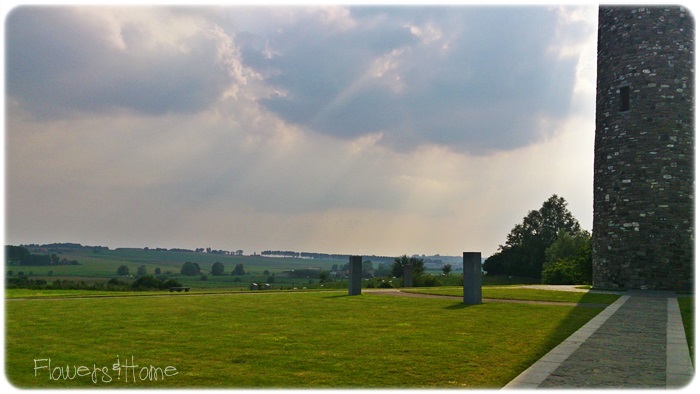
Round Irish tower at the Island of Ireland Peace Park
 
 
The Irish round tower on the background.
The plaque on the foreground has names of Irish cities on it
and on the other side, facing the tower is the peace pledge
which reads:

"From the crest of this ridge, which was the scene of terrific carnage in the First World War on which we have built a peace park and Round Tower to commemorate the thousands of young men from all parts of Ireland who fought a common enemy, defended democracy and the rights of all nations, whose graves are in shockingly uncountable numbers and those who have no graves, we condemn war and the futility of war. We repudiate and denounce violence, aggression, intimidation, threats and unfriendly behaviour.
As Protestants and Catholics, we apologise for the terrible deeds we have done to each other and ask forgiveness. From this sacred shrine of remembrance, where soldiers of all nationalities, creeds and political allegiances were united in death, we appeal to all people in Ireland to help build a peaceful and tolerant society. Let us remember the solidarity and trust that developed between Protestant and Catholic soldiers when they served together in these trenches.
As we jointly thank the armistice of 11 November 1918 – when the guns fell silent along this western front - we affirm that a fitting tribute to the principles for which men and women from the Island of Ireland died in both World Wars would be permanent peace."


Marian